Sunday, June 21, 2009

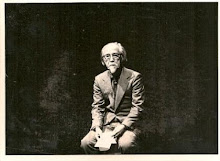
Raymond Chandler on Hollywood


"If my books had been any worse I should not have been invited to Hollywood and if they had been any better I should not have come."
***
"They don't want you until you have made a name, and by the time you have made a name, you have developed some kind of talent they can't use. All they will do is spoil it, if you let them."
***
"Wonderful what Hollywood will do to a nobody. It will make a radiant glamour queen out of a drab little wench who ought to be ironing a truck driver's shirts, a he-man hero with shining eyes and a brilliant smile reeking of sexual charm out of some overgrown kid who was meant to go to work with a lunchbox."
***
"Hollywood has all the personality of a paper cup."
***
"The motion picture is like a picture of a lady in a half-piece bathing suit. If she wore a few more clothes, you might be intrigued. If she wore no clothes at all, you might be shocked. But the way it is, you are occupied with noticing that her knees are too bony and that her toenails are too large. The modern film tries too hard to be real. Its techniques of illusion are so perfect that it requires no contribution from the audience but a mouthful of popcorn."
***
"That's one thing I like about Hollywood. The writer is there revealed in his ultimate corruption. He asks no praise, because his praise comes to him in the form of a salary check. In Hollywood the average writer is not young, not honest, not brave, and a bit overdressed. But he is darn good company, which book writers as a rule are not. He is better than what he writes. Most book writers are not as good."
***
"The making of a picture ought surely to be a rather fascinating adventure. It is not; it is an endless contention of tawdry egos, some of them powerful, almost all of them vociferous, and almost none of them capable of anything much more creative than credit-stealing and self-promotion." 

Tuesday, June 16, 2009

Murder, My Sweet (1944)


  The city of Los Angeles has a reputation for being the bearer and recorder of an entire nation's hopes, dreams, and ideals. It was first settled by Spanish missionaries in 1769 and through its long history it has been a place where its sunny climate belies a community divided by economic, social, and ethnic lines. As the central location for film and TV production it has shaped the way many people think, feel, and act. And subsequently since the start of the twentieth century it has provided a soundtrack from which many generations from then till now have listened to and defined their lives by.
  Their have been many great chroniclers of the city of Los Angeles, and like all great metropolitan areas a distinct mythology has developed around the town. Whereas Manhattan, some historians believe, earned the moniker of being the Big Apple through a series of newspaper articles written by John J. Fitz Gerald about horse-racing. As the news reporter eloquently put it: "The Big Apple. The dream of every lad that ever threw a leg over a thoroughbred and the goal of all horsemen. There's only one Big Apple. That's New York." The nickname Gerald gave the east coast town evoked the fast paced city living and sink or swim mentality that has come to define New York City and its five boroughs. Los Angeles on the other hand may have gained the nickname City of Angels due to the original Hispanic settlers wishing to evoke God's good fortune due to the harsh conditions of settlement living. The City of Angels is a place that attracts all sorts of disparate people and groups seeking their own personal paradise, but with so many people arriving day in, day out many of those dreams end up in the gutter.
  Raymond Chandler played a large role in defining L.A. as a corrupt dream factory. His seven novels sketched out for readers a California infected with all sorts of deeply flawed characters. And the way he wrote about Los Angeles became the default cinematic representation of the city. His first novel, The Big Sleep, was adapted by Warner Bros. in 1944 and theatrically released in 1946. It became, for many, the definitive adaptation of a Chandler novel, but in reality it was neither the first of Chandler's books to be adapted nor is it the only film to evoke an L.A. polluted by money and swarming with opportunists.
  Two years before the release of the Howard Hawks film Edward Dmytryk would take a crack at putting a Philip Marlowe mystery on the big screen. The film, Murder, My Sweet, would be adapted from Chandler's second novel, Farewell, My Lovely, and the picture would be financed by RKO studios. On its own the film stands as a great example of the private eye genre, but as a Philip Marlowe story their has been a long running debate between Raymond Chandler aficionados as to whether the film can even be considered part of the Philip Marlowe canon. The main point of contention is the casting of Dick Powell as private eye Philip Marlowe.
  Dick Powell began in show business as a singer and when he made the transition into film the studios took advantage of the burgeoning new sound technology and put him to work in musicals. The 1930's was a golden era for Powell who starred in several Busby Berkeley musicals alongside such talented actresses as Ruby Keeler and Joan Blondell. Yet as the decade closed Powell grew tired of being a song and dance man and took his first steps into more "serious" roles. He tried his hand at Shakespeare and even auditioned for the part of Walter Neff in Double Indemnity, but all his attempts to broaden his range as an actor failed. By 1944 RKO stood on the precipice of bankruptcy. After handing complete creative control to Orson Welles three years before and having to deal with the fallout from the Hearst scandal RKO was in no position to compete with the Big Five in Hollywood. They signed Dick Powell to a contract in the hopes that they could churn out a few relatively cheap musicals, but Powell would only sign after they agreed to offer him a legitimate dramatic role first. To keep Powell happy they quickly offered him the main part in Edward Dmytryk's next picture. With the part of Philip Marlowe Powell saw the role as a way to reinvent his image. What neither RKO nor Powell had considered was that to many film fans Dick Powell would always be a song and dance man. Not to mention the fact that when Dmytryk's film first opened it was released as Farewell, My Lovely and audiences seeing the title and Dick Powell's name on the marquee went in believing that they would be entertained by a light musical comedy. Audience turnout quickly plummeted and to salvage the film they changed the title to Murder, My Sweet.
  Decades after its theatrical release one can easily watch the film without the prejudices that audiences in the 1940's had about Powell. Detractors enjoy pointing out that Powell is a light hearted Marlowe and although I agree with that assessment I do not believe that it is a detriment to the film. Although the character of Marlowe may fall under the category of hard boiled detective he was more of a thinker than a tough guy. Whereas most cinematic private eyes learned their craft primarily from the school of hard knocks Philip Marlowe is a college educated thinker. What Powell brought to the role was a gentleness that Bogart and the other actors that later portrayed the character simply lacked. Most actors when playing Marlowe emphasize his wisecracking attitude, defiance against authority, and overall weariness for the job but most forget the inherent gentleness within the character. Powell as Marlowe moves, at times, in a clumsy manner and is constantly beaten up and knocked unconscious by several characters in the film because he is a mere man. When you watch Bogart in The Big Sleep or The Maltese Falcon you can't believe that anyone could beat him up or hurt him in any way because Bogart is one of Hollywood's perennial tough guys. Dick Powell on the other hand plays Marlowe as a man who tells corny jokes and he is never the guy with all the answers, and we believe him partly because of his reputation as a song and dance man but also because even in his 30's Powell still retained that baby-face of his.
  After watching Murder, My Sweet anyone with a passing interest in film will notice how indebted Dmytryk's film is to Citizen Kane. No coincidence since both Citizen Kane and Murder, My Sweet were made within two years of each other, and many of the crew from Kane even ended up working on Dmytryk's film. The cinematographer, Harry J. Wild, constructs shots which utilize the full depth of field and unlike many big budget films of that day he was not afraid to employ shadows for dramatic effect. And as for the set design one can see touches of Charles Foster Kane's Xanadu in the Grayle mansion. Also I would not be surprised if Marlowe's drug-induced nightmare hallucinations in the film would later be the inspiration for Salvador Dali when he designed the surrealistic dream sequences for Alfred Hitchcock's Spellbound a year later.
  One thing that all Raymond Chandler aficionados can agree upon with this film is that as in Chandler's novel Dmytryk's film is faithful to the themes which recur throughout all of the Philip Marlowe stories; which is that money is a device used by the wealthy to wash away their sins. The character of Helen Grayle is a perfect example of this since the main thrust of the story is the search for Velma Valento, a red-haired nightclub singer. It is only later in the film that Marlowe and we the audience finally figure out that Helen Grayle and Velma are one in the same woman. No matter what color she dyes her hair, expensive clothes and jewelry she puts on, or people she kills Helen Grayle cannot escape the fact that she came from a less than respectable background. Her reasons for marrying Mr. Grayle is purely a selfish desire to attain the respectability she longs for, but by creating an alternate identity she betrays her true self. Helen/Velma is a murderer and manipulator, but she is also a victim. She is a product of all of the men in her life that have exploited her insecurities and now after all that abuse she is finally taking her revenge. Murder, My Sweet is a film about corruption; not institutional corruption but personal corruption for the lies we tell ourselves can easily poison every aspect of our identity till we turn into everything we have fought to not become.

Wednesday, May 27, 2009

The Big Sleep (1946)

  Before the arrival of the internet and specifically Wikipedia a common stock character in film was the private investigator. The P.I. was such an important staple in genre cinema that a whole slew of colorful words were invented to elevate this most humble occupation into a racket bursting with private eyes, gumshoes, shamuses, snoops, and flatfoots. During a time when anonymity was neither a coy concept or something tantamount to social suicide a shamus was employed to unearth buried secrets and, if necessary, keep those secrets away from prying hands and eyes.
  Raymond Chandler started his writing career by publishing a slew of poetry, book reviews, and even a short story. His work was not met with any excitement and he retreated to menial jobs to make a living. One important career move he made was as a bookkeeper for a oil company in southern California. Although he had a distaste for the way his corrupt employers did business that did not prevent Chandler from advancing to the position of vice-president. It would not be till the Great Depression though when his alcoholism and dalliances with office secretaries would cost him his job. With no other way to make money Chandler returned to writing.
  In the 1930's the best place for hungry writers to go and earn some sort of living were the pulp magazines. Chandler spent an entire year studying the in's and out's of detective fiction before finally putting pen to paper to create Blackmailers Don't Shoot. The 18,000 word short story took him five months to write and Black Mask magazine paid him $180 for it. Chandler's most famous creation though would be private detective Philip Marlowe.
  Chandler infused the typical street tough detective with a chivalric code and turned the shamus into a knight errant for the twentieth century. Or as Chandler put it so eloquently "down these mean streets a man must go who is not himself mean, who is neither tarnished nor afraid...he must be the best man in his world and a good enough man for any world." Philip Marlowe was an incorruptible man in a corrupt world where people oftentimes sell their souls for easy comfort.
  Marlowe would make his first appearance in 1939 when Chandler published The Big Sleep, a novel based on several short stories that Chandler had written for Black Mask magazine. The simple story has Marlowe tracking down a blackmailer for General Sternwood, an elderly millionaire who has been relegated to enjoying all his vices by proxy. Marlowe must navigate the prickly world of killers, gangsters, pornographers, and making his job even more difficult are the General's daughters, Carmen and Vivian, who are wary of all the attention he is paying on the sudden disappearance of Rusty Regan, a man whose disappearance will ultimately lead to several deaths. The labyrinthine plot structure offered Chandler the opportunity to tackle one of his favorite themes which is the clash between idealistic values/beliefs and the stark reality of living in a compromised society. This book not only guaranteed Chandler a place in the literary community, but he also managed to create the template from whence other detective fiction would spring forth from.
  Seven years after the publication of Chandler's novel Warner Bros. would theatrically release the film adaptation. Directed by silver foxed filmmaker Howard Hawks and starring Humphrey Bogart as Philip Marlowe and Lauren Bacall as Vivian Sternwood Rutledge. The film garnered attention due to the pairing together of Bogart and Bacall and also because of the hard to follow plot. Yet there is more going on in the film once you take a closer look at it.
  One important issue to consider when discussing The Big Sleep is the fact that the film exists in two versions, a pre-release cut which included several scenes that elucidated several hanging plot threads and the theatrical cut which put a spotlight on the Bogart and Bacall on-screen/off-screen romance. The existence of these two versions highlights an issue that the film constantly raises, which is the intangibility of the truth.
  As Marlowe digs for answers to who is blackmailing the Sternwoods and how Rusty Regan's disappearance fits into all of it he finds that nothing is as it seems. Arthur Gwynn Geiger (Theodore von Eltz) sells rare books, but underneath all that respectability he is really a pornographer. Sternwood's daughters dress and act like respectable society women, but Carmen is a nymphomaniac and Vivian, although showing genuine concern for Marlowe, is more than willing to let a murderer go free to keep her family's name out of the press. And then there is Eddie Mars, a gangster racketeer, who pretends to be a cuckolded husband to divert attention from the fact that he is the one blackmailing the Sternwoods. Wherever Marlowe turns he is met with lies or half-truths; one can't simply rely on the surface value of what we see and hear; just because the truth may be unpleasant to face we must still demand answers and not be complacent.
  Underlying the film's main storyline is the pervasiveness of sex and the treatment of the story's protagonist, Philip Marlowe, as a sex object. From the very first scene of the film to right before the fade out women can't seem to stop flirting with Marlowe and/or falling right into his arms. Though unlike the typical female characters you might find in standard Hollywood fare the women in The Big Sleep are assertive and have no qualms about taking what they want. In fact the women in the story, at times, are more masculine than the men. This gender inversion can be read as a comment on society as a whole. The industrialized world we live in is a much more dangerous world than we can ever realize. There is no room for damsels in distress when Armageddon is no longer biblical hearsay, but rather a frightening possibility.
  For Humphrey Bogart playing a detective would be nothing new. He had portrayed Sam Spade in John Huston's The Maltese Falcon several years earlier; though audiences coming to either films for the very first time should not make the mistake in believing that just because in both films Bogart is playing the detective protagonist that Spade and Marlowe are cut from the same cloth. Nothing could be further from the truth. While both men do share a quick wit and have an innate knack for attracting the opposite sex Spade is rather quite cold and cruel when compared to Marlowe. When faced with a comely young female Marlowe denies himself, and by proxy the audience, the pleasure of her company. Spade on the other hand beds his partner's wife before the start of the story and then after his partner's death he takes up with Brigid O'Shaughnessy, a liar and manipulator. Also there is an ambiguity about where Spade's loyalty lies till the very last scene of the film. This contrasts with Bogart's portrayal of Marlowe which is that of a man above reproach; of the seven murders in The Big Sleep Marlowe is responsible only for one and even then his actions were in self defense. Spade relies on his ability to think and act as a criminal so that he can win their trust and later arrest them, but you never forget while watching the movie that Marlowe is one of the good guys.
  Unlike Huston's film Hawks ends his movie on an upbeat note. When you take away all the death and sordid details of the story you find that Hawks was really telling a love story. In the film as in real life Bogart seems fated to end up with Bacall. In the very first scene of the film we find out that before his disappearance Rusty Regan handled the first blackmail attempt on the Sternwoods. Regan, a surrogate son to General Sternwood, is replaced with Marlowe who drinks brandy, chats with the General as Regan used to, and is employed to take care of sensitive family business just as Regan had done before him. Of course as Marlowe proceeds with his investigation he must deal with Vivian, the General's oldest daughter, and although turned off at first by her spoiled nature he is quickly intrigued after several verbal sparring matches with her. The great obstacle in their not getting together is the issue of trust. Only after Marlowe has put all of the pieces of the puzzle together and in turn offered Regan some semblance of justice can Marlowe finally be with Vivian. By the end of the film this knight errant for the twentieth century not only blurred the lines between star and character mythology, but the entire story itself is one of the most romantic courtships ever put on film. 

Wednesday, April 22, 2009

Point Blank (1967)

  The gangster genre is endemic of American culture. In the history of film the advent of sound coincided with the rise in popularity of the gangster picture. The possibility of hearing the bang of a gun and the screams of its victims offered a new level of reality that lurid still photos and trashy tabloid articles could only report about. Of course as lionized as gangsters were the public's opinion of them could easily turn once the gangster character showed his true face; that of a thief, an exploiter, and at times a murderer.
  After the 1930's the gangster was relegated to being a stock villain. Although the gangster still embodied the skewed American dream, to come from nothing and acquire everything through the barrel of a gun, the character was more often than not a caricature of their previous self. The term gangster itself had become a word used to describe any tough talking character in a film.
  By 1967 the country was a different place and the values that screen gangsters once held could no longer sustain them during that tumultuous decade. John Boorman took a simple premise, a man on a quest to get back the money owed to him, and took apart the pieces that make a gangster picture a gangster picture and reconstituted it into an avant-garde exercise in genre expectations.
  Over the years Boorman has said many things about the film, Point Blank. He has called the film a story about one man's quest for humanity. A comment made to illustrate the importance of casting Lee Marvin in the role of Walker. Fans of Lee Marvin may not be aware, but the actor had enlisted as a soldier when he was only seventeen and served as a sniper. By the time he came back from the war he had seen so much death and pain that he drifted aimlessly from several menial jobs till his work as a plumber's apprentice in a community theater in upstate New York landed him a role in one of their productions. He soon moved to Manhattan and began appearing in several off-Broadway plays. By 1950 Marvin transitioned into film and because of his years in military service he was cast in several war dramas. Most of his film work before he got cast in Point Blank was a career spent playing violent despicable men.
  When Boorman presented Marvin with a draft of the script Lee Marvin was fascinated with the character of Walker. It is easy to see what drew him to the project. The character of Walker is a gentle sweet man whose loyalty to his friend lands him in a criminal quagmire. Just as Marvin was transformed by the violence he witnessed in war Walker is transformed by the gunshot he receives from Mal Reese, a man he called his friend.
  In the film Walker is a spirit of violence. After his betrayal he is reborn as vengeance personified stomping through a fluorescent-lit corridor his footsteps reverberating from the long empty hallway towards locations unknown. He is on a quest to get the money owed to him, but the money is not what Walker is really after. Walker is after a sense of peace, a resolution that will end the pain and anger he feels for having his idyllic life shattered.
  It is very important to note that Walker never kills anyone in the film. He may be a spirit of violence and in fact he viciously beats up several people in the picture, but he never directly kills them. Be it Lynne, his wife, Mal, his so-called best friend, or the various underlings that Walker must deal with to get his money somebody else has their finger on the trigger. Walker is merely a facilitator in their demise. He gets them to be in just the right place at just the right time to meet the bullet.
  As you watch the film it is clearly evident that a theme that Boorman has running throughout the entire picture is the clash between the traditional and the modern. The movie itself opens with a series of elliptical shots, something very unusual for a gangster picture, a stock Hollywood genre. Our first glimpses of Walker are not of a vicious killer but rather of a man who is a victim of fate, being brutally shot in a tiny cell. Next we see him trapped in a crowded room of men, drunk, and struggling to keep on his feet. Then all of a sudden a man yells out Walker's name and lunges at him. Walker and the man, who we find out is his friend Mal, fall and Mal pins Walker to the ground pleading for help. From these first few minutes in the film audiences in 1967 expecting a typical reliable Hollywood film must have been utterly floored by Boorman's audacity to open the film the way he did.
  Also whereas in previous gangster pictures the homo-erotic undercurrent was subtle so as not to upset the censors Boorman pushes the boundaries and makes Walker's relationship with Mal blatantly homo-erotic, adding new layers to Mal's betrayal. The relationship between the two men is equivalent to that of a classic Hollywood screen gangster's relationship to his moll. The character of Mal is weak and throughout the film he turns to various men for help. Mal preys on Walker's innate loyalty to him, he seduces Walker by reminding him of old times together. When Boorman cuts to flashbacks of Walker and Mal together he has those scenes mimic that of Walker and his wife's courtship. It is obvious that there is some sort of attraction between these two men, and it is Mal's betrayal that hurts Walker more than his own wife's.
  Although Walker must contend with several members of organized crime his real opponent maybe modern life itself. The gangsters in this film are car salesmen, accountants, and CEOs. Basically organized crime had gone corporate and as tough as Walker is this new efficient businesslike manner within organized crime is completely foreign to him. Even his quest for the money owed to him seems out of place within the context of the story. Walker, a spirit of violence, can only comprehend the world through what is tangible; he wants to be paid in cash not check and he cuts a swath of violence in an effort to get to the head of the organization only to find that in the new corporate criminal empire their isn't a singular boss that one can approach. When a job needs to be done the rule is to delegate the task to somebody else who in turn hands over the responsibility to someone below him. This is the antithesis of who Walker is. Walker is a man of action.He does not delegate he attacks and will not relent until he gets what's owed to him.
  The film's simple premise of a man out to get the money owed to him offered John Boorman and Lee Marvin the opportunity to explore the ideas that many people held to be true. By the time of the film's release daily life had become more mechanical. Society shifted to that of the corporate world which is cold and inhuman, where power is valued more than the lives of a few people. In this new paradigm every person, place, and thing is cataloged and shelved until their services are needed. We have relinquished control of our lives to a small group of corporate board members in exchange for cheap pleasures. We gobble up whatever new gadget or toy they throw at us and we gladly ask for more stuff to clutter our lives with. By the end of the film Walker just vanishes, his money only a few yards away, but he dare not touch it. For in a world where profit is the only way to measure a man then those who value truth and loyalty can only exist as ghosts. 

Wednesday, March 25, 2009

Ed Wood (1994)


  Unbridled optimism is a trait that has long been ridiculed by the public. It is a trait that is usually used as comic fodder in films; something to laugh at and oftentimes looked upon as the refuge of the simpleton. Of course cynicism itself is no better; it has become, for many, a defense mechanism to ease the pain of daily living. Ed Wood is a celebration of a man whose ideas exceeded his talents. Edward D. Wood, Jr. would go down in movie history as the world's worst director of all time, and his film Plan 9 from Outer Space the worst movie ever made. And yet what has contributed to his work getting more attention now than when they were first released is the fact that although the pictures he made were of varying quality you could tell that an enthusiast was behind the camera putting together the various pieces that make up a film, even if all those pieces didn't come together so neatly.
  Tim Burton took directorial reins on Ed Wood for several reasons. The first being that he was already a fan of the director's work; drawn in by the fact that no matter what project Wood was working on he treated the material as if it were Citizen Kane. As a result of Burton's admiration for Wood's work the film has an obvious bias; portraying Ed Wood not as a delusional hack but rather as a sincere artist. The second reason Burton had for directing was the relationship Wood had with Bela Lugosi which mirrored the relationship Burton had with Vincent Price. And finally after reading the script, penned by Scott Alexander and Larry Karaszewski, Burton saw the film as an opportunity to make a character-driven film as opposed to one distinguished by visual flourishes.
  As a character-driven film it is on the actor's shoulders to breath life into the story and Johnny Depp delivers in every scene he's in. Depp studied Andy Hardy, Mickey Rooney, Ronald Reagen, and Casey Kasem to bring the character of Ed Wood to life. He carefully balances Wood's trademark blind optimism with his sexual quirks and manages to always keep the audience on his side. As we watch Depp play the character of Ed Wood we never slip and laugh at him. It is to Johnny Depp's credit that what could have turned into a very unfunny caricature of the director never does. Wood's sexual proclivity for dressing in women's clothing is treated not as a punch-line to a cliche joke, but just a matter-of-fact detail about Edward Wood's life.
  The meat of the film deals with Wood's relationship with Bela Lugosi, played by Martin Landau. These two men each believe that the other can help their careers, but in actuality it is their friendship and not their business partnership which has the most value for both men. Landau plays Bela as a man who aches for another chance at stardom and you believe that he may just get that opportunity. Bela, even in his 60's, never lost the ability to frighten people with a stare or subtle hand gesture. As Lugosi tells Wood during their first meeting, "The pure horror, it both repels, and attracts them, because in their collective unconsciousness, they have the agony of childbirth. The blood. The blood is horror." With that statement Lugosi gets to the heart of not just why the horror genre has always been popular, but also the fact that fear is a drug that the human race has been addicted to since we began to walk upright.
  Other important people in Ed's story are the various women in his life. The two most important being Dolores Fuller, his girlfriend at the start of the film, and Kathy O'Hara, the woman who would become his wife by the end of the movie. Although Sarah Jessica Parker's portrayal of Dolores has been criticized as shrill and unpleasant she is quite supportive of Ed and her demands aren't at all unreasonable. In fact her only mistake in the movie is being the voice of reason in a story populated by people completely entranced by the magic of film. Kathy on the other hand is wholly accepting of Ed and Patricia Arquette plays Kathy as the embodiment of Ed's optimism. Whereas many people in Ed's group might question his choices Kathy not only goes along with Ed, but she goes out of here way to feed his enthusiasm.
  Edward D. Wood, Jr. was somebody who wasn't that concerned about what movie he was making, but rather just having the opportunity to make a film was what thrilled him. When he was in the process of directing there would be two things that he was never without, his megaphone and a boyish grin on his face. And that was basically who Ed Wood is in Tim Burton's film; a boy who still believed that all you needed to make a movie was a good idea and a crew of people who shared your excitement for the project.

Wednesday, March 11, 2009

Sunset Boulevard (1950)


  How do you classify a film that is equal parts comedy and tragedy? Can you even call it comedy if you cringe a bit after the laughter dies out? With Sunset Boulevard Billy Wilder utilizes his acerbic wit to knock down the glamour mask of Hollywood and show it as the grotesque and decaying whorehouse that it really is. Of course Wilder knew that by taking on Hollywood he would basically be biting the hand that fed him. A hand that had garnered him several Oscar nominations, a very healthy paycheck, and also the resources to create his brilliant pessimistic work. Yet as caustic as Sunset Boulevard is one can't help notice that the film is not so much an attack on the entertainment industry, but rather it is a dedication to all the shattered dreams that Hollywood has left in its wake.
  As broad a topic as Hollywood is Wilder concentrates his story on two people, a once great silent screen actress and a down on his luck screenwriter. These two couldn't be any more different from each other, but they do accurately represent a majority of people in the entertainment industry. You are either trying to get your foot in the door or struggling to not get pushed out.
  The silent screen actress, Norma Desmond, is played by Gloria Swanson who in real life had enjoyed success as an actress during the silent era and although she did make the transition into talkies her career never did take off like it had before. Swanson's portrayal of Norma Desmond is a combination of vampire, self-delusional actress, and possessive lover. Desmond lives in a mansion gaudily decorated and surrounded with constant reminders of her days as a star. Norma is careful to always surround herself with people and things that reaffirm her belief that she is still a star. Her self delusion is a means to protect herself from the reality that she is now merely a footnote in Hollywood history.

  William Holden, on the other hand, plays Joe Gillis as a man of desperation who exploits Norma from their very first meeting. Gillis is a man that has been chewed up and spit out by the Hollywood machine and sees Norma as a means to get back at least some monetary recoupment for all the indignities he has suffered. Yet his plan to milk Norma for all he could quickly falls to pieces. The longer he stays in her mansion as a pawn in her delusions of stardom the tighter Norma's insanity coils around Gillis till finally there is no escape from the inevitable.
  Joe Gillis and Norma Desmond's co-dependent affair as twisted as it was had started out as a mutually agreeable arrangement. Their affair did not grow so much from an emotional need to be together, but rather a more down to earth reason. Joe needed cash and Norma was starved for attention and companionship. Their arrangement could have technically continued for an indefinite amount of time. It is only when Joe starts to spend time with Betty Schaefer, a script reader played by Nancy Olson, that there affair starts to crumble. Joe's feelings for Betty although sincere can never be fully realized because he has entrenched himself so deeply in Norma's reality that Joe has become a male version of Norma. Whereas Norma deludes herself into believing that she is still a star; Joe pretends to stick around Norma for the money but in reality he sees his situation with Norma as an escape.
  Like many of Wilder's protagonists Joe Gillis is trapped in his job. His arrangement with Norma maybe yet another trap but at least he can wear the best suits, take a refreshing swim in her pool whenever he wants, and Joe Gillis is basically the center of Norma Desmond's world. He only leaves its comforts after having to admit to Betty and subsequently himself just what type of man he really is. And although Norma shoots Joe due to the threat of her having to face the sad truth of her situation if he left her; Joe goads her to shot him because of his unwillingness to go back to the harsh reality of the world outside of the mansion.

  Sunset Boulevard tackles as its subject opportunism and the consequences of trying to have a career in an industry that feeds on desperation. Billy Wilder knew that all success is fleeting, and in a business where you are only as good as your last film anybody who congratulates you on all your success today maybe clutching a knife ready to stab you in the back the next day.

Sunday, February 22, 2009

Double Indemnity (1944)


"Yes, I killed him. I killed him for money and for a woman. I didn't get the money and I didn't get the woman. Pretty, isn't it?"

  The allure of tabloid scandals and media sensationalism has now become the norm. So-called journalists spend entire days sifting through the refuse of human society trying to find a story that will keep viewers glued to their TVs. This insatiable hunger is fed by a constant flood of celebrity updates and lurid tales of human death and degeneracy.
  For James M. Cain when he was writing his book, Double Indemnity, he looked back towards his previous life as a news reporter to help spark an idea in him. The story he would use would be that of Ruth Snyder, an icy blonde, who had managed to convince her lover, Judd Gray, to bludgeon and strangle her husband to death. She was caught though and put on trial. The press labeled her a "Tiger Woman", a derogatory term used to describe the new type of woman springing up in society that shunned house work and embraced the flapper lifestyle. Cain was fascinated by her story and used it as the basis for his novel.
  In 1943 Billy Wilder was primarily known as a screenwriter. Although he had directed a few films that were considered financially successful he had not yet established his rightful place as one of the preeminent American directors. Wilder's risk to take Cain's sleazy novel and turn it into a film alienated him from many in the movie industry who thought that the story and characters would never pass the censor boards. His gamble paid off though and Wilder accomplished the impossible by turning a trashy cynical story about adultery, corruption, and murder into that rare thing called art.

"It was a hot afternoon, and I can still remember the smell of honeysuckle all along that street. How could I have known that murder can sometimes smell like honeysuckle? Maybe you would have known Keyes the minute she mentioned accident insurance, but I didn't. I felt like a million."

  Wilder's penchant need to work with a writing partner may ultimately have contributed to making him such a great director. When it came to making films Billy Wilder always tried to surround himself with the best. During pre-production for Double Indemnity Wilder looked towards Cain to help him adapt the book, but since Cain was already contracted out to another studio Wilder turned elsewhere.
  Raymond Chandler had made his name writing detective fiction and gained a reputation for crafting tough and fast stories about tarnished knight errants. Although Chandler had no experience in screenwriting Wilder was confident that Chandler's way with words would elevate the film's dialogue. Chandler's stylized dialogue moved at machine gun speeds and never shied away from sexual double entendres.

"That was all there was to it. Nothing had slipped, nothing had been overlooked, there was nothing to give us away. And yet, Keyes, as I was walking down the street to the drugstore, suddenly it came over me that everything would go wrong. It sounds crazy, Keyes, but it's true, so help me. I couldn't hear my own footsteps. It was the walk of a dead man."

  Because of the unsavory subject matter that the movie deals with, Wilder had a lot of trouble finding actors to be in the film. Wilder was so desperate that he turned to actor George Raft for the part of Walter Neff. During there meeting though Raft refused to read the script and ordered Wilder to tell him the story. As Wilder dictated the story to him, Raft eventually ordered Wilder to "get to the lapel scene." Confused by Raft's request Wilder  asked him what "lapel scene" was he talking about. Raft, apparently believed, that by the end of the story the audience would find out that his character was really a cop and arrests Phyllis Dietrichson. After that meeting Wilder felt completely dejected and believed that the movie would never get made.
  The part of Walter Neff would eventually be played by Fred MacMurray, a sometimes musician and actor who made his name in Disney comedies. MacMurray's non-threatening good looks work to the advantage of the story. Neff is not an inherently evil character, but rather just a bored one. He decides to help Phyllis kill her husband not because he needs the insurance money, but rather because he is tired of the daily grind.
  Phyllis, on the other hand, is a killer. Phyllis ensnares men into her trap and manipulates them to do her bidding. Barbara Stanwyck as Phyllis is a powerful character. Wilder and Chandler arm her with typical garish female visual signifiers; e.g. anklet, lipstick, angora sweater, wig; but it is Stanwyck who makes it all work and also imbues the character with a strength that most of the male characters in the story lack.
  The only real friendship that Neff has in the story is with the claims manager, Keyes, at the insurance company. Edward G. Robinson plays Keyes as a man who lives and breaths facts and statistics; unlike Neff he does not allow his emotions to make decisions for him. Thus it hurts even more by the end of the story when he finds that Neff, his only friend in the company, is Phyllis's accomplice.

"Just like the first time I came here, isn't it? We were talking about automobile insurance, only you were thinking about murder. And I was thinking about that anklet."

  John Seitz, the film's director of photography, was integral in establishing the look of the film. He had the idea to mix silver dust with some subtle smoke effects to create dramatic shafts of light that cut through the Dietrichson home. Also with this film Seitz establishes the use of "Venetian blind" lighting giving any room the appearance of bars which seem to trap the characters in their schemes.
  Double Indemnity elevated Billy Wilder's status in the film industry, yet the film is really a product of many artists not just one person. The very casual way in which sex and death are so entwined was quite ahead of most of the film's being made back then. The film doesn't ask you to like any of the characters, instead it challenges you to realize that every person is susceptible to corruption even those with the best intentions.